For Immediate Release
February 5, 2026
Towing Industry Sounds Alarm Over Kansas City’s Enforcement of Ordinance 250709
Kansas City, MO – Towing industry stakeholders and consumer advocates are raising serious concerns about Kansas City, Missouri’s implementation of Ordinance 250709, a new law allowing the City to impound vehicles from private property. The ordinance – passed in 2025 and intended to take effect on January 1, 2026 – has encountered administrative delays at the county level, yet the City has pressed ahead with enforcement. This press release highlights reports of questionable towing incidents, potential violations of Missouri state law, and a call to action for affected individuals to come forward. Industry leaders warn that the City’s actions under Ordinance 250709 may be overstepping legal boundaries and harming both consumers and local businesses.
Ordinance 250709: New Private Property Impound (PPI) System
Ordinance 250709 was promoted as a crackdown on “predatory towing” practices in Kansas City. It amends City towing regulations to provide new consumer protections and to streamline how Private Property Impound (PPI) tows are handled. A key feature is the establishment of an electronic submission process for PPI requests to the Kansas City Police Department (KCPD). Instead of property owners or tow operators calling police dispatch or faxing forms, all private-property tow requests must now be entered into an online system accessible by KCPD. City officials tout this digital platform as a way to make KCPD response more efficient and to create a digital trail for each tow. Indeed, the Towed Vehicle Owner’s Bill of Rights created under the ordinance promises transparency – including an online “Find Your Car” database where owners can locate their impounded vehicle – and caps on towing fees to prevent gouging.
Kansas City Councilmember Darrell Curls, who sponsored Ordinance 250709, has stated that the goal is to protect drivers from bad actors in the towing industry and give drivers more rights. Among the City’s claimed justifications are: prohibiting tows if a vehicle owner is present and willing to move the car, requiring written authorization for private-property tows, creating an online reporting portal for all tows, and informing every owner of their new “bill of rights” when their car is towed. These measures were presented as a way to increase fairness, accountability, and oversight in towing. “Too many residents have been blindsided by excessive towing fees and shady practices… This ordinance sends a clear message: we are standing up to bad actors and putting power back in the hands of drivers,” Councilman Curls said upon the ordinance’s approval.
Enforcement Begins Despite Delayed Implementation
Ordinance 250709 was slated to become effective on Jan. 1, 2026, following its passage in late 2025. However, stakeholders report that certain county-level administrative systems were not yet in place to support the new law’s processes by that date. Despite this, the City of Kansas City moved forward with enforcement of the ordinance in early January. The result has been confusion and concern among tow operators and property owners.
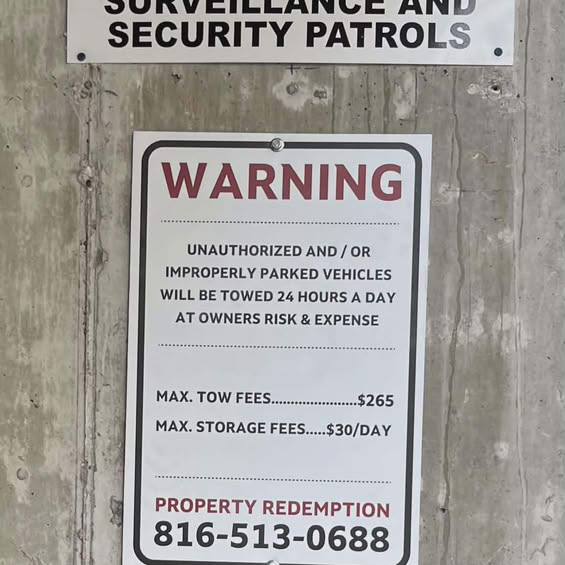
Notably, numerous incidents have been documented – particularly in the River Market area – of vehicles being impounded from private parking lots under the claim of “law enforcement authorization” even though no police officers were on site at the time. In these cases, vehicle owners and property managers reported that City-dispatched tow trucks removed cars from private property without an officer present, ostensibly under the new PPI program. These reports suggest that the City may be bypassing standard procedures that require direct law enforcement involvement for such tows, raising alarms about the legality of the impoundments. Community members have expressed outrage that cars were taken “under color of law” without an actual officer to verify the situation, which they argue violates the spirit and letter of Missouri’s towing laws. City officials have not fully addressed why enforcement proceeded despite the delayed county coordination, nor how these specific River Market tows were authorized. The incidents are now under scrutiny as potential evidence of overreach. It has also been discovered recently that the city has put tow signs up in all of the private parking garages across the plaza without cancelling the contract of the private towing company.
Possible Violations of Missouri State Towing Laws
Critics warn that Kansas City’s handling of private property tows under Ordinance 250709 may be running afoul of Missouri state towing laws meant to protect property owners and vehicle owners. Missouri law sets strict requirements for non-consensual tows (towing a vehicle without the owner’s permission, typically from private property). Before any vehicle is towed from private property, the tow company must complete and sign a Missouri Department of Revenue Form 4669 (Abandoned Property Report) and notify local law enforcement of key details (vehicle information, time of tow, where it’s stored). State statutes further dictate that a vehicle can only be removed immediately if proper conditions are met – otherwise the property owner or tow operator must wait prescribed periods and get law enforcement involved. For example, if a car is simply parked without permission, the property owner must first notify police and then wait 96 hours before towing, unless proper signage is posted (for shorter wait times). Missouri law also allows a law enforcement officer to authorize an impound within 48 hours if the vehicle is a safety hazard or obstruction, but that explicitly requires an officer’s judgment and authorization. In short, state law demands either an officer’s direct approval or strict adherence to waiting periods and notification procedures for private-property tows.
Kansas City’s new ordinance nominally incorporates these state mandates – it requires tow operators to report all private tows via the city’s online platform within 2 hours (for signed locations) or 24 hours (others), and it acknowledges that a police officer may authorize a tow on private property in specific circumstances (e.g. after 48 hours or if a hazard). The ordinance even states that tow companies must produce documentation for any impound, “including but not limited to a completed Form 4669 or equivalent authorization,” when asked by law enforcement. However, the way the City is executing the PPI program appears to sidestep the very safeguards that Form 4669 and police involvement are meant to ensure. If tows are being green-lit through an electronic system without real-time oversight by an officer, it could mean impounds are happening without the on-site verification or formal written authorization that Missouri law contemplates. Such practices may violate §304.153/304.155 RSMo and related statutes, which were designed to prevent illegal or predatory tows by ensuring law enforcement is in the loop. State law plainly requires a towing operator to involve law enforcement and follow specific procedures – a safeguard to protect vehicle owners – and any local process that circumvents this could be unlawful.
City Competition and Impact on Local Businesses
Another contentious aspect of Ordinance 250709 is that it effectively pits the City of Kansas City against private towing companies in the market for private-property tows. By centralizing PPI requests through KCPD and the City’s chosen platform, the ordinance creates a scenario where the City (or its contracted vendor) directly handles tows that used to be performed by private operators. In fact, the ordinance explicitly allows the City’s Director of Public Works to “authorize a contractor to oversee city tows of vehicles within the city”. This means Kansas City can designate its own towing contractor or program to take over tows from private lots, placing City Hall in direct competition with locally owned tow businesses.
Local tow operators say they are already feeling the squeeze. Many had longstanding arrangements with apartment complexes, businesses, and parking lot owners to remove unauthorized vehicles in compliance with Missouri law. Now, those property owners must go through the City’s PPI system – and the city-dispatched tow trucks get the call, cutting out independent towing firms. Industry representatives argue that this not only threatens their livelihoods but could also reduce consumer choice and concentrate power in a single city-controlled towing service. Private Party Impound LLC, a Kansas City towing service, noted in a recent court filing that the new rules “disproportionately burden” small towing businesses and even put them at risk of liability when forced to follow city mandates that conflict with state law. The company’s lawsuit highlighted that complying with the city ordinance could require releasing vehicles to persons without proper proof of ownership – something state law forbids – thereby exposing tow companies to potential theft claims. Although that suit was denied by a Jackson County judge in late 2025 (allowing the ordinance to proceed), the concern remains that Kansas City’s entry into private towing is unfairly undermining local operators. What’s more, if the City’s own towing program makes a mistake, it is ultimately taxpayers and citizens who bear the consequences, not a private company.
Legal Action on Behalf of Consumers – Call to Action
Members of the towing industry and consumer-rights attorneys are now exploring further legal remedies to address these issues. Notably, attorney Mark E. Meyer (email: meyerlaw78@yahoo.com) has announced he is investigating a potential class action lawsuit to protect vehicle owners (consumers) who may have been harmed by the City’s PPI enforcement. Such a class action would seek to hold the City accountable for any improper or illegal impounds and to ensure that citizens’ rights under Missouri law are upheld. “Vehicle owners who have had their cars taken under this new ordinance – especially if proper procedure wasn’t followed – deserve a voice and possibly compensation,” said a spokesperson for the effort. The prospective lawsuit would argue that Kansas City must abide by state towing statutes and due process; impounding a person’s vehicle without adhering to state law could violate property rights and consumer protection laws on a broad scale. Meyer, who has been at the forefront of previous litigation in this arena, is urging any individuals who believe they were wrongfully towed under Ordinance 250709 to come forward.
Affected consumers are encouraged to document their experience and contact Mark E. Meyer at meyerlaw78@yahoo.com. This includes people whose vehicles were removed from private property in Kansas City without proper notice, without an officer present, or who faced unusual difficulties retrieving their vehicle from the city’s impound. By gathering a coalition of affected residents, the class action aims to shine a light on questionable enforcement and press the City to halt any unlawful towing activities. It is a call for transparency and correction: if the ordinance’s implementation has overstepped, the City should pause and recalibrate before more citizens are hurt.
Public Impact and Demands for Accountability
The implementation of Kansas City’s Ordinance 250709 is no longer just a regulatory matter—it has become a public issue touching the rights of property owners, the wallets of vehicle owners, and the viability of local towing providers. Stakeholders are calling on Kansas City officials to immediately review and remedy the ordinance’s enforcement:
Ensure Compliance with State Law: The City must guarantee that all private property impounds strictly follow Missouri state requirements (Form 4669 filing, police authorization, waiting periods) to protect citizens. If the current process delegates too much authority to a non-law-enforcement clerk or an automated system, it needs correction so that licensed law enforcement officers are properly overseeing and approving tows in real time.
Suspend Questionable Tows: Pending a full review, any program where city agents or contractors remove vehicles from private lots without an officer on-site should be suspended. The reports from River Market and elsewhere of no-officer impounds are red flags that warrant an immediate pause and investigation.
Collaborate with Industry: Local towing companies urge the City to work with them, not against them. Rather than edging out reputable operators, Kansas City could incorporate a fair rotation or permit system that does not unfairly advantage a city contractor. Open dialogue can help achieve the ordinance’s consumer protection goals without destroying small businesses.
Educate Property Owners and Residents: The City should clearly inform apartment complexes, businesses, and the public about how the PPI process works and what rights and responsibilities everyone has. This includes clarifying that police involvement is still required by law in many cases – a point that may be lost if people assume the city’s online request system replaces officer authorization.
Kansas City’s new towing ordinance was ostensibly created to protect the public from predatory towing, but its rollout has revealed potential overreach by the City itself. “We support reasonable towing regulations and consumer protections,” Allen Bloodworth managing member of Private Party Impound, LLC. said, “but the City must also play by the rules. You can’t just impound cars off private property without following state law – even the City isn’t above the law.” The controversy surrounding Ordinance 250709 serves as a reminder that well-intentioned policy must be implemented with care and legality. Local stakeholders and attorneys will continue to monitor the situation, and further legal action remains on the table if necessary to protect Kansas Citians’ rights.
###
Media Contact:
(For press inquiries or more information on these issues)
Allen Bloodworth – Private Party Impound, LLC
Email: recoverykc@gmail.com ofc 8167778800
Consumer Contact for Class Action:
Mark E. Meyer, Attorney at Law
Email: meyerlaw78@yahoo.com | Phone: 816-729-0866
Source Citations: Relevant excerpts from KCMO Ordinance 250709 and Missouri law are provided in brackets above for reference. Additional information available upon request.